Labels

Sunday, September 18, 2022

Science Article #1 - Introduction to Science Articles, Current Events in Science

 SCIENTIFIC SCIENCE NEWS - Trash Mutant

Science Articles  

Read a science based article.  Learn how Science is happening in our daily lives and how it relates to you. You can get your information from a newspaper, magazine or from the internet. 
It should be handwritten NEATLY or typed and shared with my pconsidine@schools.nyc.gov account.  

 Follow these simple steps to make an A!  
1) Summarize the article in 5-7 sentences (i.e. What is the article about?)
2) How does this affect us? (1 sentence min.)
3) Why is this important? (1 sentence min.)
4) How is this science related? (1 sentence min.)
5) Pick a science word and write its definition.  Use a dictionary or www.dictionary.com
6) Draw a picture or find one on the internet that relates to your topic.
7) Make sure to include your source.  i.e. Where did you get your information from?  website url, magazine title and date, newspaper title and date

Science Article Sources


- Click on the above link, scan the front page, find an article that interests you, click on it, read it, then follow the directions above!  :)
- Note: Use the front page of the website, don't go surfing around.  

4        3210
Heading, Neatness, Overall Organization
The loose leaf/Doc is neat, the heading is legible, the work is organized-    -Parts of the heading are missing, the Doc is disorganizedThere is no heading. The loose leaf is torn. It is disorganized.
Summary explaining the main ideaThere are at least five sentences in the summary paragraph, the summary is relevant to the articleThere are only four sentences in the summary paragraphThere are only three sentences in the summary paragraphThere are only one to two sentences in the summary paragraph; relevance lacking.There is no summary and/or it's irrelevant
1) How is it science related? 2) Why is this important? 3) How does this affect us?All of the Science questions have been answered.Two of the three Science questions have been answered.One of the Science questions has been answered.The questions have not been answered properly, they have been copied, etc.None of the Science questions has been answered.
Science word dictionary definitionThere is a Science word from the article that has a proper dictionary definition.---There is no definition, it has been made up, the word is not from the article, etc.
Science illustrationThere is an illustration from the web that relates to the article OR the student created one themselves with effortThere is a student constructed Science illustration with no color or satisfactory effort.
Minimal effort has been put into the Science illustration.Bare minimum effort shownNo illustration provided

Friday, September 16, 2022

Mini-Lab: Prediction, Observation, Inference


Tips: 1) Get the same size and type of soda.

         2) 1 diet soda, 1 regular soda

         3)  DON'T open them.

         4) Carefully place them in a container of water, slowly press towards the bottom, then release, watch what happens.

         5) Prediction, Observations and Inference must be written in your Science Notebooks; you may sketch your Observations too.  :)
 

Thursday, September 8, 2022

Getting to know you interview - HW

Getting to Know You Interview

1. What is your name?   (Example: My name is Mr. Considine.)
2. When is your birthday?  (My birthday is on 9/9/__.)
3. Where were you born? (I was born in WPB, FL, USA.)
4. What is your favorite school subject? (My favorite school subject is.... SCIENCE!!!)
5. What is your favorite kind of food?  (I like sushi, noodles, pasta, and enchiladas.)
6. Have you visited other US States?  Have you been to any other countries?  Where have you been?  (I've been to many countries in Latin America, South America, Asia, Europe and 47 out of 50 US States including Puerto Rico.)
7. What's one thing you know about Science? (I'm a science teacher, so I know quite a bit, but I'm always learning!  :)
8. What is one thing you are good at?  (I'm good at snowboarding, hiking and teaching Science. )
9. Make up your own question and answer here!
10.  Two Truths : One Lie


Thursday, September 1, 2022

Welcome to Mr. Considine's Science Scholars :) Rules, Protocols, Procedures and Grading Policy

Welcome to SIXTH GRADE Science Scholars Class of 2025!


Here are some requirements and tips for this school year:


1) Bring a blue/black pen, a pencil, a ruler, AND a colored pen (red, yellow, orange, etc) to class every day.
2) You need two marble notebooks: one for Science notes and one for Science Lab.
3) Your HW will be completed in your Science notebook.
4) You must bring in a Science folder which will be kept in class as your Portfolio.

Science Scholar's Classroom Dos and Don'ts
1) DO come to class on time; if you are late and without a pass, you will make the time up on YOUR time.
2) DO bring bottled water, but leave all other liquids at home.
3) DO keep your area clean and dispose of all trash into the garbage bin, but DON'T do this while Mr. C is teaching.
4) DO enjoy your breakfast and lunch, but DON'T bring food into Mr.C's class.  Food attracts mice and insects which do NOT defecate or urinate in toilets.
5) DO keep your phones and all electronic devices on mute (no vibrate) and in your bags or you will pick it up after school on YOUR time.  If this becomes a recurring problem, then your parents will have to pick it up themselves.
6) DO raise your hand if you want to ask a question or contribute to the discussion, for it is important to keep ORDER in the classroom. 


J.H.S. 227 Edward B. Shallow

Science Grading Policy 2022-2023
Ms. Lincoln
Assistant Principal

30% Exams
•        Unit Assessments

20% Projects/Tasks
·   Online presentations, LABs and group projects 

15% Quizzes
·   POP quizzes, Exit Tickets, etc

15% Classwork
·         Students are responsible for being prepared for class each day and participating in the discussions.
·         Notebook Checks 

15% Participation
·   Raise your hand, further the discussion, act on your curiosity, challenge your classmates and teacher!
·  Help a classmate. participate in Think-Pair-Share (TPS) during class
·  Help to maintain an orderly, welcoming, clean classroom environment

5% Homework
·         Notebook Checks, weekly/nightly assignments


Assignment Requirements:

·         Students must complete ALL Assessments that are graded and placed in portfolios per marking period 

·         Students must complete ALL Investigation requirements per marking period in their Science Lab Notebooks

·         Students must complete ALL WRITING requirements per marking period that is to be graded and then to be placed in the portfolios 

 Portfolios promote academic excellence, promotion and student accountability!


Wednesday, March 16, 2022

Organism Creation Project


You are a mad scientist that has the ability to create an organism by splicing DNA from other organisms and recombining that DNA to form a new organism. 

Make a slide for each of the following: 
1)Name your organism
2)From what other organisms did you collect DNA from to create your own?  What characteristics does it still have?
3)Draw a picture of your creation
4)Write a description of your organism and link it to the traits that determine what it means to be alive: 
a) Living things are organized and made up of cells,
 b) Living things grow and develop, and they have a lifespan, 
c) Living things respond, 
d) Living things maintain homeostasis, 
e) Living things use energy, 
f) Living things reproduce, 
g) Living things have a life span,
 h) Living things excrete wastes
5)In your description, tell us about how your organism acquires its “needs” i.e. food, water, shelter

Palmizzard


•The palmizzard is the organism that I’ve created.  I created it using the DNA from a lizard and a palm tree.  It has palm leaves growing from its back which allows it to produce its own energy with the help of radiation from the sun.  The palm leaves also provide shelter for the palmizzard; it lives on hot desert islands, so it needs protection from the sun which the palm leaves provide.  It has coconuts growing from its tail which it uses in times of self-defense.  It cannot run fast, so it needs camouflage that the palm leaves provide.  It is 4 feet in length as an adult.  The palm leaves help trap water so that when it rains, which is rarely on a desert island, the leaves collect the water for future use.  It eats insects and fruit that has fallen to the ground.  It mates twice a year and gives birth to live offspring.  If attacked, it will use its tail in self-defense and, if necessary, it will drop its coconuts to keep the animal attacking it busy as it flees.  The palmizzard excretes its waste 3-4 times a day. Its cells are a combination of plant and animal cells.

Sunday, February 13, 2022

Black History Month Celebrates the Contributions of Black People in the Scientific Community!


Follow these simple steps to make an A!

1) Summarize the article in 5-7 sentences (i.e. What is the article about?)
2) How does this affect us? (1 sentence min.)
3) Why is this important? (1 sentence min.)
4) How is this science related? (1 sentence min.)
5) Pick a science word and write its definition.  Use a dictionary or www.dictionary.com 
6) Draw a picture!
7) Make sure to include your source.  i.e. Where did you get your information from?  website url, magazine title and date, newspaper title and date


Choose ONE of the articles to read below, read it, then follow the rubric for composing a science article: 

1. ‘I Trust Science,’ Says Nurse Who Is First to Get Vaccine in U.S.

2. Victor Glover becomes first Black astronaut to arrive at space station for long-term stay

3. The Science Of Scary: Why It's So Fun To Be Freaked Out

4. This NASA Engineer Is Bringing Math And Science To Hip Hop

5. America has vaccines thanks in part to an African slave who saved Boston from smallpox

6. The Secret Life of Scientists & Engineers | Neil deGrasse Tyson

7. The Secret Life of Scientists & Engineers | Jim Gates

8. The Secret Life of Scientists & Engineers | Bruce Jackson

9. The Secret Life of Scientists & Engineers | Mae Jemison

10. Stephon Alexander THE SECRET LIFE OF SCIENTISTS AND ENGINEERS

11. The Secret Life of Scientists & Engineers | André Fenton

Sunday, February 6, 2022

Lab #8 – Tracking Hurricanes


Lab #8 – Tracking Hurricanes

Hurricanes are classified according to the Saffir-Simpson Scale, which categorizes the storms from one to five depending on sustained wind speed, height of storm surge, and extent of damage. Some of the specifics for each hurricane category are listed in Table 1. The National Weather Service issues a hurricane watch when there is a threat of hurricane conditions within 24 to 36 hours. They issue a hurricane warning if hurricane conditions are expected within 24 hours.

Problem

How are hurricanes tracked?

Hypothesis


Materials

Pencil
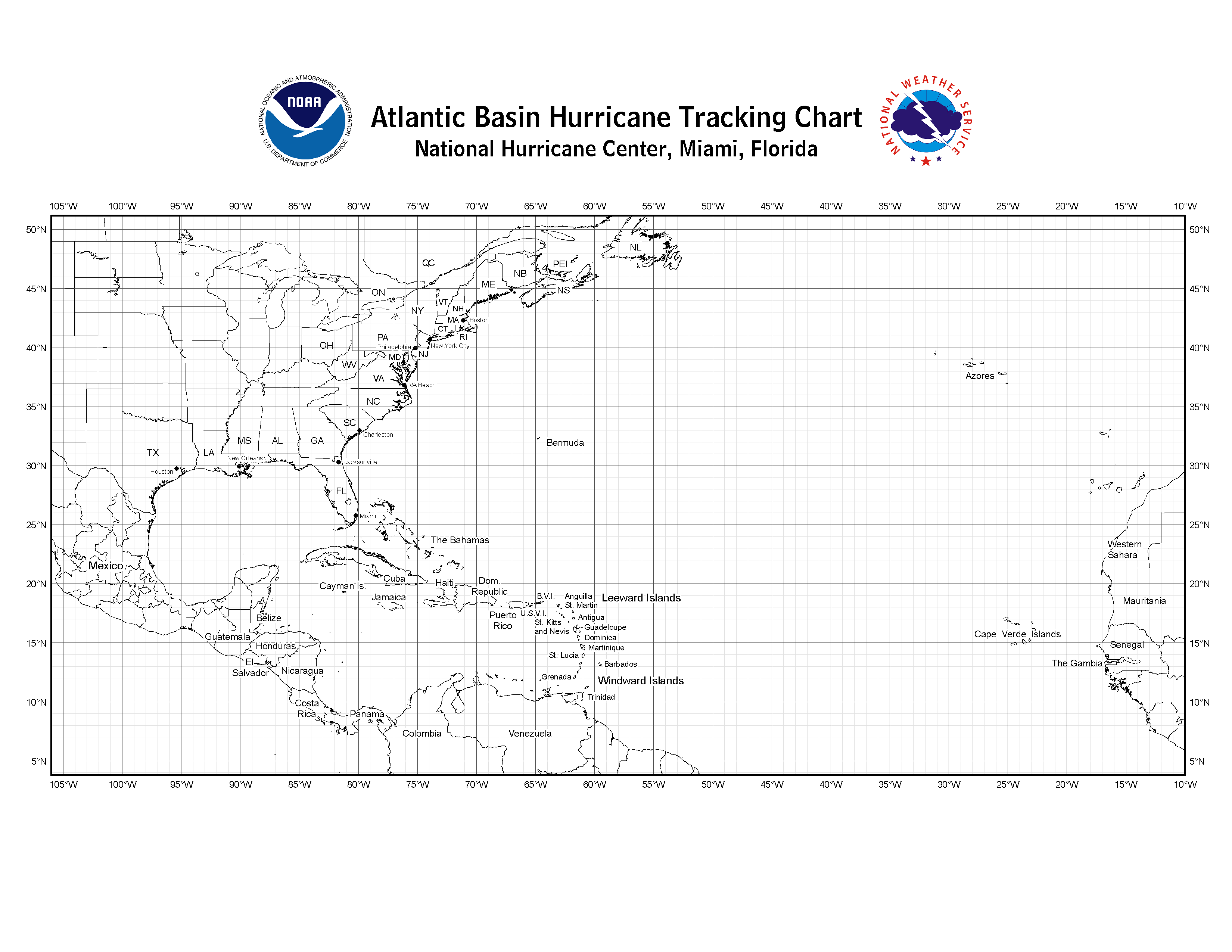
Atlantic Basin Hurricane Tracking Chart found at http://www.nhc.noaa.gov/AT_Track_chart.pdf

Procedure

Part a—Historical Hurricanes

  1. Familiarize yourself with the classifications of hurricanes according to the Saffir-Simpson Scale in Table 1.
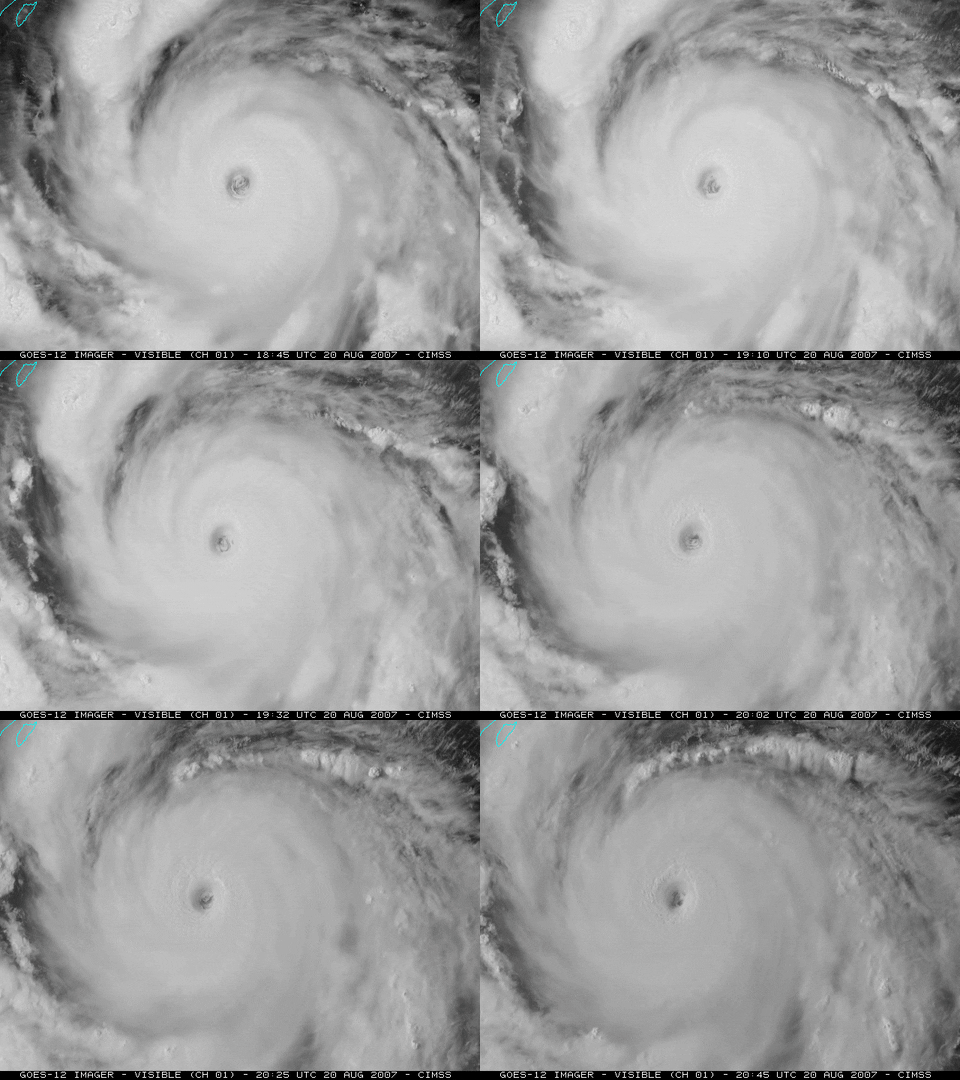
  2. Read about some major hurricanes of the past, which are described in the Data and Observations section, and watch the 2012 Hurricane Sandy Video.
  3. Use the Saffir-Simpson Scale to classify each of the historical hurricanes described in the Data and Observations section. Write the category number in the space provided next to each description.

Part B—Hurricane Tracking

  1. Use the data in Table 2 to plot the course of a hurricane. Start by plotting the storm's location on Day 1 on the Hurricane Tracking Chart in Figure 1.Mark the hurricane's location with a dot, and label it as Day 1.
  2. Considering only wind speed, classify the storm as a tropical storm or a hurricane. If the wind speed is less than 119 km/h, consider it a tropical storm. If the wind speed is 119 km/h or more, use the Saffir-Simpson Scale to decide what category describes the hurricane on this day. Write your observations in Table 2.
  3. Plot the storm's location at Day 2, label the dot, and connect the two dots with a straight line. Classify the storm as described in step 2.
  4. Consider that you are a forecaster with the National Weather Service. You must issue a hurricane warning to any land 24 hours before the center of a hurricane passes over it. Decide if you should issue a warning on Day 2. If yes, what areas would you warn? Write your observations in Table 2.
  5. Repeat steps 3 and 4 for the storm's duration.

Part A

Data and Observations

In the space provided, list the category of each storm; use the Saffir-Simpson Scale below.
  1. ____ Hurricane Fran moved into North Carolina's southern coast in September 1996. Total damages from the hurricane exceeded $5 billion. Hurricane Fran had sustained winds of approximately 184 km/h and gusts as high as 200 km/h.
  1. ____ The Halloween Storm of 1991 has been called the "perfect storm." It packed sustained winds of 120 km/h.
  1. ____ Hurricane Bertha pounded the southeast coastline as well as the Bahamas in July 1996. The storm had winds peaking at 184 km/h.
  1. ____ When Hurricane Andrew slammed southern Florida in August 1992, it was the most costly natural disaster in United States history, with about $26 billion in damage. The storm killed 26 people and destroyed more than 25,000 homes. Its wind speeds are now thought to have reached up to 265 km/h.
 5. ____ Hurricane Celia hit Texas in August 1970, causing $1.6 billion in damage. The storm was characterized by very high winds that damaged an airport and destroyed a nearby mobile home park. Its highest estimated wind speed was around 257 km/h.
  1. ____ Hurricane Camille, which hit the Gulf Coast and then swerved east toward the Carolinas in August 1969, was the fifth most costly disaster in United States history with damages of $5.2 billion. Camille caused the death of 250 people. Its sustained wind speeds reached 320 km/h.
  1. ____ Hurricane Katrina, which devastated New Orleans in 2005 was the costliest hurricane, as well as one of the five deadliest, in the history of the United States. Among recorded Atlantic hurricanes, it was the sixth strongest overall.  Katrina made landfall Aug. 29 with top sustained wind of about 201 km/h.
8.       ____ Hurricane Irene, made its final landfall in Brooklyn, New York City in 2011.  Throughout its path, Irene caused widespread destruction and at least 56 deaths. Damage estimates throughout the United States are estimated near $15.6 billion.  Its highest winds reached 120 mph (195 km/h).
       9. ____ Hurricane Sandy affected 24 states in the U.S., including the entire eastern seaboard from Florida to Maine and west across the Appalachian Mountains to Michigan and Wisconsin, with particularly severe damage in New Jersey and New York. Its storm surge hit New York City on October 29, 2012, flooding streets, tunnels and subway lines and cutting power in and around the city. Damage in the United States amounted to $65 billion.  Its highest winds reached 115 mph (185 km/h).


Table 1

Saffir-Simpson Hurricane Scale


Category
Wind Speed (km/h)
Effects
One
119-153
No real damage
Two
154-177
Some roof and window damage
Three
178-209
Some structural damage to small residences; mobile homes destroyed
Four
210-249
Extensive building failures
Five
greater than 249
Complete roof failure on buildings; some complete building failures

 Part B

Day
Latitude (°N)
Longitude (°W)
Wind speed (km/h)
Type of Storm
Issue warning? Where?
  1
15
47
  56


  2
17
53
  80


  3
18
57
112


  4
21
60
144


  5
23
64
160


  6
23
69
232


  7
25
74
216


  8
27
78
216


  9
32
79
168


10
41
74
  96


11
45
67
  72


12
48
56
  64


Analysis

  1. Which of the storms described in Part A were category five hurricanes?
  1. What information did you use to classify each of the storms?
  1. The formation of a hurricane depends on what three factors?
  1. When did the hurricane tracked in Part B reach the status of a category three hurricane? (Hint: The data presented in Table 3 shows one measurement for each day of the storm.
  1.   Reflect: A hurricane starts out as a low pressure system, why is this so?  Why would a high pressure area not turn into a hurricane?  (Hint: Think of the water cycle.)
  2. There is a hurricane warning; what are three things you do to prepare for it?
­____________________________________________________________________


Conclusion


 What was your problem?
 Restate your hypothesis.  Was it right? wrong?  why or why not?
 What did you learn in this lab?
 What did you like about this lab?
 What were some challenges you had to deal with?
 What could you do next with this problem?  What other tests could you perform?
 Write down any other additional thoughts, observations, inferences, etc.


Monday, January 24, 2022

Interpreting a weather map HW


 Can you predict tomorrow's weather?
Explain the following: 
1) "H" and "L",
 2) patches of green/pink/white, 
3) blue lines with triangles, red lines with semi-circles.  
4) Which direction is the weather in the U.S., generally, moving?
5)  What does this weather map tell you about our conditions here in NYC?